
If you follow the automotive industry even casually, the first week of April 2026 must have been quite interesting for you. At the New York International Auto Show Hyundai Boulder Concept made a move that industry insiders had been anticipating for quite some time—yet the manner in which it unfolded was genuinely unexpected.
The company, previously known primarily for its sedans and hatchbacks today unveiled a distinctly American-style—boxy, rugged and off-road-capable—SUV concept and it did so on a body-on-frame platform.
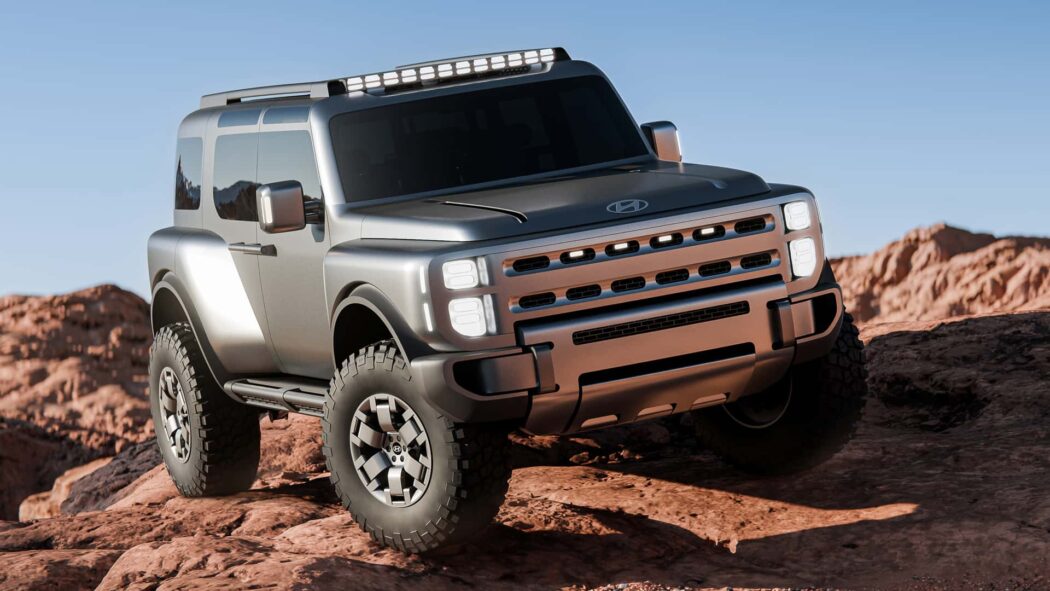
What is the Hyundai Boulder Concept? — Let's Understand It First
The Boulder is currently a concept vehicle, not a production car. However, it is not merely a fancy showpiece. Hyundai itself has confirmed that the Boulder Concept serves as a design preview for its first-ever body-on-frame platform, and a production-ready midsize pickup truck based on this platform is slated to launch before 2030.
So, essentially, the Boulder is a blueprint It is a signal from Hyundai indicating that they are now poised to enter a market segment currently dominated by formidable vehicles such as the Toyota Tacoma, Ford Bronco, and Jeep Wrangler.
The design of the Boulder Concept was executed by Hyundai Design North America team, based in Southern California It has been crafted specifically with American off-road enthusiasts in mind.
Hyundai Boulder Concept Debut: New York Auto Show 2026
April 1, 2026 — The day at the 2026 New York International Auto Show when Hyundai took the industry by surprise.
Taking the stage, Hyundai CEO José Muñoz stated directly: Body-on-frame vehicles are the backbone of American work and adventure, and we intend to compete in the midsize pickup segment with everything we have.
This was not merely a tagline, it was a serious declaration of intent Hyundai plans to introduce 36 new vehicles in North America by 2030, and the Boulder-based pickup truck is one of those 36 vehicles. Hyundai Global Design Head, SangYup Lee, also shared a touching sentiment—he described the Boulder as a four-wheeled love letter to the dynamic, off-road way of life. And honestly, when you look at the concept…
Table of Contents
Hyundai Boulder Concept Exterior
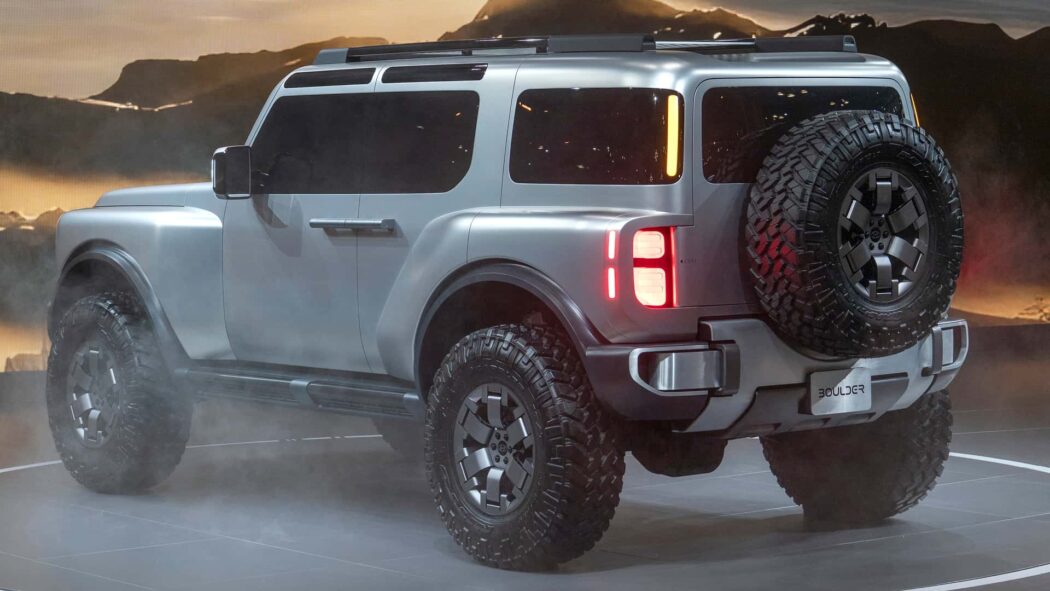
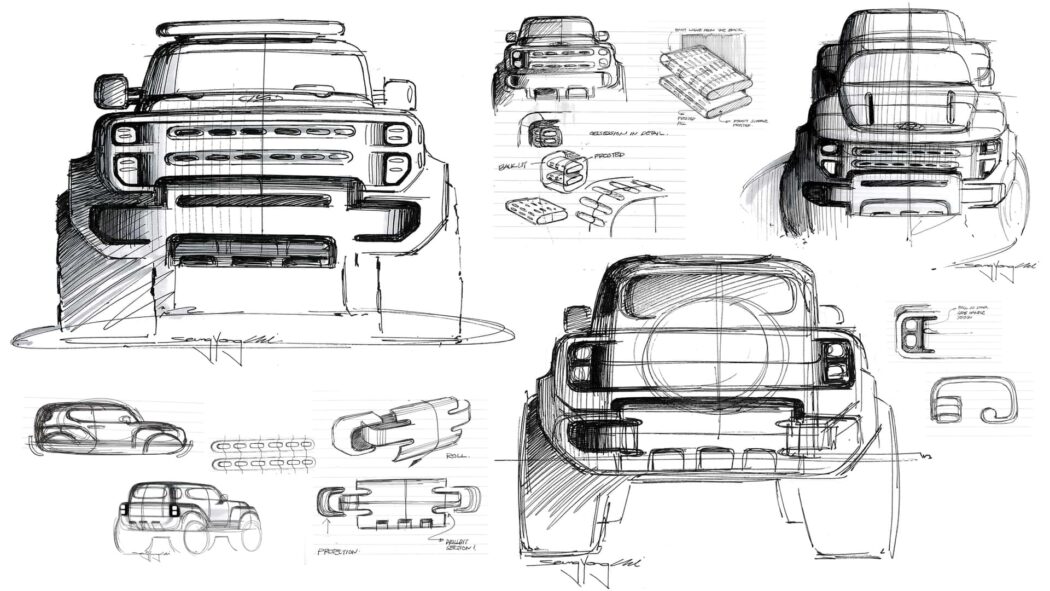
At first glance, the Boulder reminds you of something familiar—a bit like the Jeep Wrangler, a bit like the Land Rover Defender, and a bit like the Ford Bronco However, when you look closely you realise that the Boulder possesses a distinct identity of its own.
Art of Steel Design Philosophy
The Boulder entire exterior design is grounded in the “Art of Steel” philosophy, which Hyundai introduced at the 2026 NY Auto Show This philosophy draws inspiration from Hyundai Steel advanced steel technologies.
Details That Truly Impress
37-inch Mud-Terrain Tires (37×12.50R18 LT): These dimensions are just for show. 37-inch tyres are typically found on serious off-road vehicles—such as the Toyota Land Cruiser 76 Series or heavily modified Wranglers—where such a setup is a common sight.
Tailgate-Mounted Full-Size Spare: Mounting the spare tyre on the rear tailgate is a classic design hallmark of off-road vehicles It is precisely this feature that makes the Jeep Wrangler so iconic The Boulder has adopted this feature and it is a sensible choice.
Double-Hinged Rear Tailgate: This is a genuinely innovative feature The tailgate opens from both sides—from the left as well as the right. Additionally, there is a power-operated drop-down rear window that proves useful for loading extra-long items.
Safari-Style Dual Fixed Upper Windows: To flood the cabin with natural light there are dual fixed windows positioned overhead These windows not only let in light but also provide a panoramic, open-air feel.
Coach-Style Doors: Both the first and second rows feature coach-style doors, which make side-loading significantly easier.
Reflective Tow Hooks and Door Handles: A small yet thoughtful detail—key exterior elements are clad in reflective material.
Liquid Titanium Finish: The Boulder features a “Liquid Titanium” colour—a sophisticated metallic finish that gives the vehicle an aggressive stance while maintaining a premium aesthetic.
Hyundai Boulder Concept Interior
While the exterior may have impressed you, the interior genuinely surprised the experts The Boulder cabin adopts a retro-futuristic approach—a bold choice in 2026, when everyone else is simply piling touchscreen upon touchscreen.
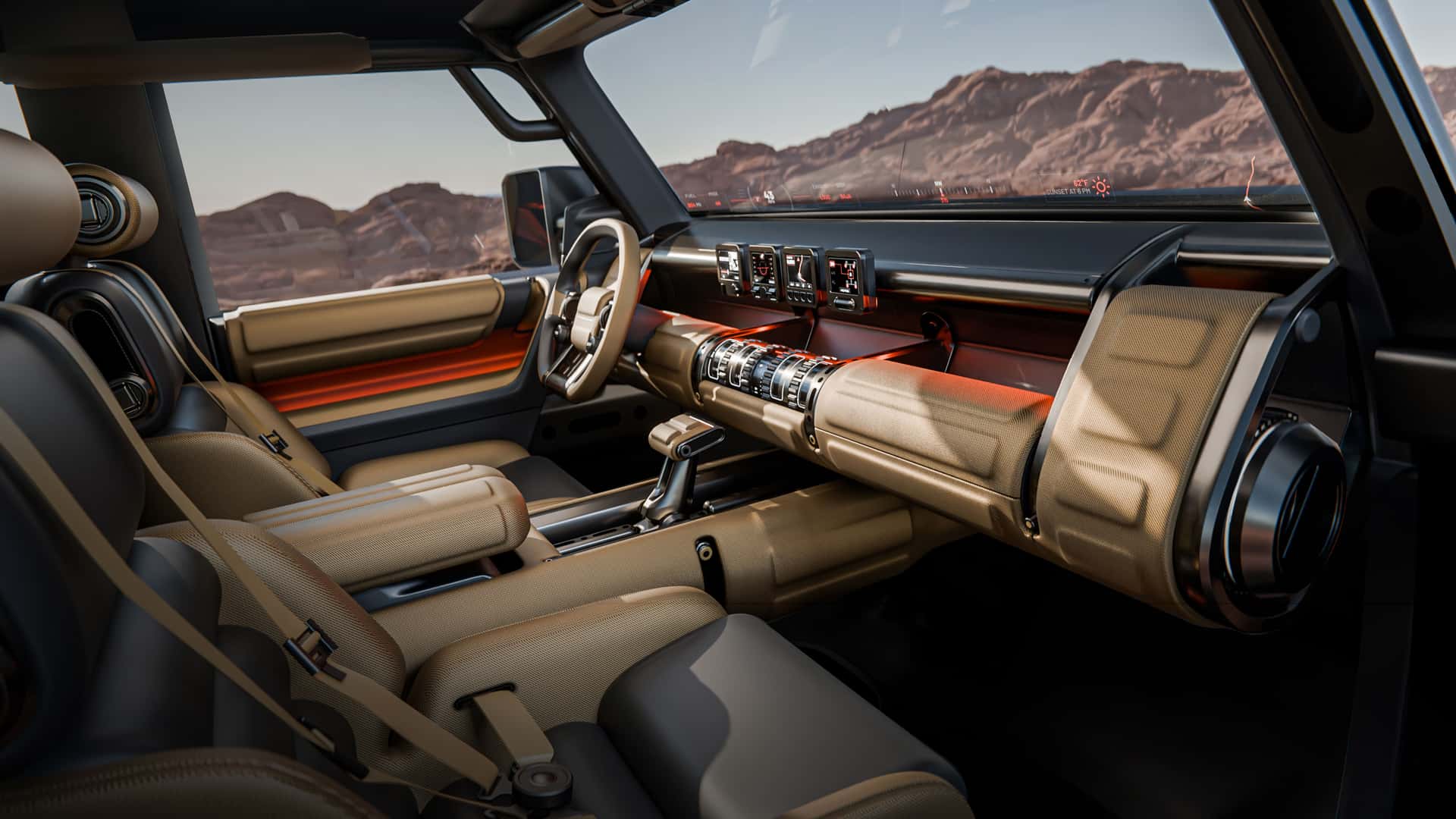
The Boulder lacks a traditional instrument cluster Instead, vital vehicle information is displayed on a full-width head-up display positioned at the base of the windshield This means the driver never has to take their eyes off the road—speed, navigation, off-road angles—everything remains directly within their line of sight.
Four Small Screens + Physical Controls
Nowadays, every car company is in a race to provide a giant touchscreen With the Boulder Hyundai took the opposite approach—featuring four small square displays paired with physical knobs and buttons This layout is designed for practical off-road use—whether the vehicle is shaking or the terrain is rough, you can simply press a direct physical button instead of having to navigate through menus.
Fold-Out Tray Tables
This feature might sound unusual at first—but just think about it You the middle of a trail, taking a lunch break, or need to get some work done out in the field Fold-out tray tables transform the cabin itself into a mini workspace or dining area—a testament to practical original, and user-centric design thinking.
Grab Bars Made of Robust Materials
Passengers need something to hold onto The Boulder features grab bars covered in high-wear-resistant materials The overall material quality of the interior is robust.
| Vehicle Type | Body-on-Frame SUV Concept designed for extreme off-road capability |
|---|---|
| Platform | Fully boxed body-on-frame chassis (Hyundai’s first of its kind) |
| Tire Size | 37x12.50 R18 LT Mud-Terrain tyres for serious off-roading |
| Spare Tire | Full-size spare mounted on rear tailgate |
| Tailgate | Dual-hinged tailgate, opens from both sides for better accessibility |
| Rear Window | Power-operated drop-down rear glass |
| Roof Rack | Heavy-duty roof rack with steel webbing for carrying gear |
| Display System | Full-width windshield HUD paired with four square digital screens |
| Controls | Physical knobs and buttons for rugged usability and ease of operation |
| Exterior Color | Premium “Liquid Titanium” finish |
| Design Language | “Art of Steel” – bold, muscular and futuristic styling theme |
| Design Origin | Hyundai Design North America, based in Southern California |
| Production Timeline | Expected midsize pickup derivative planned by 2030 |
| Manufacturing | Designed, developed and likely to be built in the United States |
Hyundai Boulder Concept Price
There is currently no official price The Boulder is a concept vehicle, and concept vehicles typically do not have an official price tag.
- Toyota Tacoma (2026): Starting around $32,000–$35,000
- Ford Bronco (2026): Starting around $35,000–$42,000
- Jeep Wrangler (2026): Starting around $33,000–$55,000+
Historically, Hyundai has tended to offer slightly more competitive pricing than its rivals—providing a superior value proposition Based on this logic the production version of the Hyundai Boulder could likely fall within the $30,000 to $45,000 range, spanning from the base model to the top trim
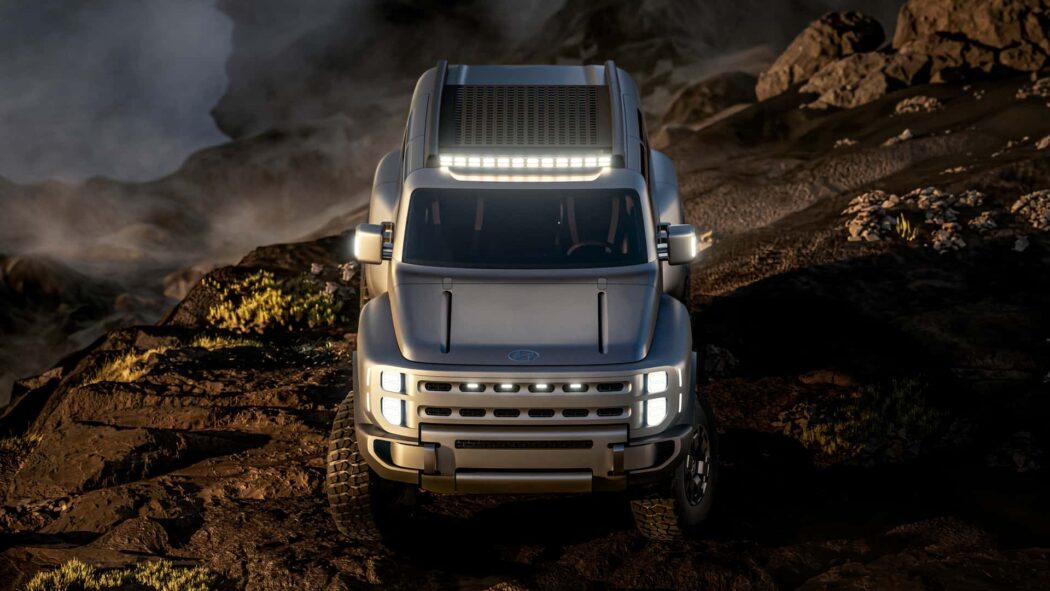
Hyundai Boulder Concept Release Date
Hyundai has officially confirmed that a production-ready midsize pickup truck—built upon the Boulder Concept body-on-frame platform—will be launched before the year 2030.
- 2026–2027: Platform development and engineering work is underway.
- 2027–2028: Testing phase expected.
- 2028–2029: Possible official reveal of the production model.
- 2029–2030: Showroom deliveries expected.
Hyundai has not yet made any commitment regarding a production version of the Boulder SUV—officially the Boulder remains a “pure design study.”
Hyundai Boulder vs. Competitors: Comparison
1/ Hyundai Boulder vs. Jeep Wrangler
The Wrangler is the undisputed king of off-roading. Body-on-frame construction, removable doors, solid axles—it has it all The Boulder has clearly drawn design inspiration from the Wrangler—featuring a boxy shape, a rear-mounted spare tire and coach-style access However, the Boulder interior technology and HUD display system appear to be significantly ahead of the Wrangler.
2/ Hyundai Boulder vs. Ford Bronco
The Bronco made its revival in 2021 and proved to be a massive success Both the Boulder and the Bronco are boxy off-roaders featuring body-on-frame construction The key difference is that the Bronco ecosystem—including accessories, community and history—is already well-established The Boulder will have to build all of that from the ground up.
3/ Hyundai Boulder vs. Toyota Tacoma
The Tacoma is a midsize pickup truck not an SUV—yet their target audiences often overlap The Tacoma is legendary for its reliability If Hyundai aims to demonstrate Tacoma-level reliability in a production version of the Boulder that is something that will take time to prove.
4/ Hyundai Boulder vs. Toyota 4Runner
The comparison between the Boulder and the 4*4 is the most direct—both are body-on-frame SUVs The 4*4 design is beginning to show its age and Toyota has yet to release an updated version. The Boulder could emerge as a modern fresh alternative for buyers seeking capabilities similar to those of the 4Runner.
Designed in America, Built in America
Hyundai has specifically emphasised that its future body-on-frame vehicles will be:
- Designed in America
- Developed for America
- Manufactured in America
- Constructed using U.S.-produced steel supplied by Hyundai
This is not merely marketing rhetoric The current environment regarding tariffs and trade policies in the U.S makes domestic manufacturing a smart move—both politically and economically.
What is the Greatest Significance of the Boulder Concept?
First off—Hyundai is a Korean company that has been successful in the American mass market for decades with its sedans, crossovers, and EV However, they had no presence in the body-on-frame segment, which happens to be America most profitable automotive sector The Boulder serves as a signal that they intend to fill that gap.
Secondly—Hyundai recent track record is quite strong The Ioniq 5 created ripples in the EV segment while the Palisade marked their entry into the 3-row SUV segment Every time Hyundai has ventured into a new segment they have competed in earnest.
Thirdly—The off-road market is currently on the rise. Since the pandemic there has been a significant surge in the popularity of outdoor lifestyles.
Frequently Asked Questions (FAQ)
Will the Hyundai Boulder Concept come to India?
There is no official confirmation at this time The Hyundai Boulder has been designed primarily for the U.S. market. If the production model proves successful, global expansion is possible—though this would likely be a development for the post-2030 era.
What is the expected price of the Hyundai Boulder Concept?
An official price has not yet been announced. Based on its competitors a price range of $30,000–$45,000 USD is expected for the production version.
When will the Hyundai Boulder launch?
The body-on-frame production midsize pickup truck is scheduled to launch before 2030. A production version of the Boulder SUV has not yet been confirmed.
Will the Boulder be electric?
Hyundai has not officially confirmed the powertrain Gasoline and hybrid options are expected an EV version is possible in the future.
Conclusion
The 2026 New York Auto Show saw the debut of many vehicles However, the impression left by the Boulder was distinct from all the rest.
This is not merely an SUV concept it is a declaration from Hyundai—signaling that they are ready to compete in America most critical automotive segment They possess the design vision the platform commitment, and the right team to do so.
The production truck is slated to arrive before 2030 Following that, there is a strong possibility of a Boulder SUV as well. Until then this concept serves as a reminder that no company in the automotive industry remains static—and that disruption often originates from the very companies that take everyone by surprise.