
On March 9, 2026, Hyundai officially launched its new Hyundai Verna 2026 facelift, priced from ₹10.98 lakh to ₹18.25 lakh. This time it comes with over 25 updates It has a new design, new features, improved safety, and some segment-first features But with every launch, the question inevitably arises is this car as good as the company claims?
Hyundai Verna 2026 At a Glance
| Launch Date | 9 March 2026 |
|---|---|
| Starting Price | ₹10.98 Lakh (Ex-Showroom) |
| Top Variant Price | ₹18.25 Lakh (Ex-Showroom) |
| Variants | HX2, HX4, HX6, HX6+, HX8, HX10 |
| Engine Options | 1.5L Naturally Aspirated Petrol | 1.5L Turbo GDi Petrol |
| Gearbox Options | 6-Speed Manual / IVT (NA) | 6-Speed Manual / 7-Speed DCT (Turbo) |
| Maximum Power | 160 BHP (Turbo) | 113 BHP (NA) |
| ARAI Mileage (Best) | 20.6 kmpl (Turbo DCT) |
| Boot Space | 528 Litres |
| Wheelbase | 2670 mm |
| Safety Rating | 5-Star Global NCAP |
| Airbags | 6 Standard | 7 in Top Variant |
| ADAS | Level 2 ADAS with 20 Advanced Safety Features |
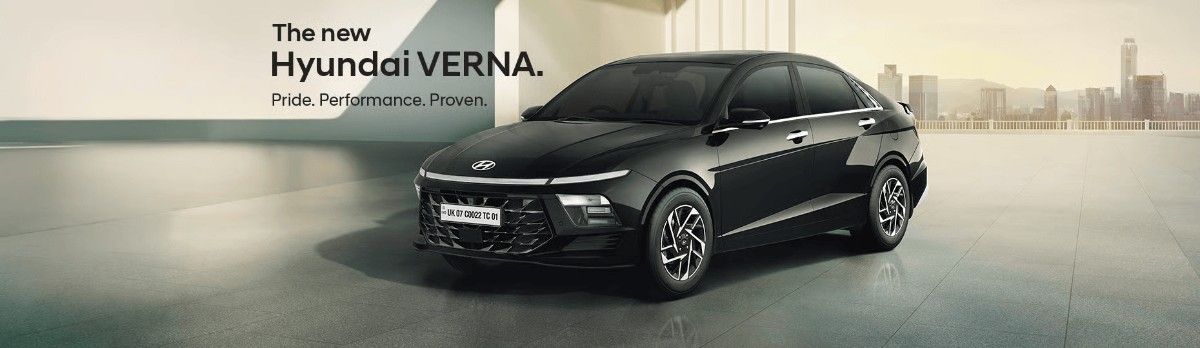
1. Verna New Design – Changes
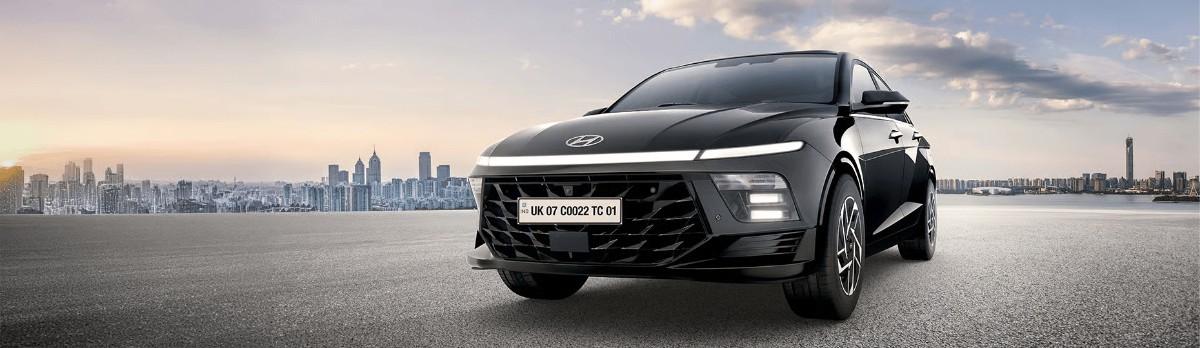
One thing becomes clear as soon as we look at the Verna 2026 design: Hyundai has made only minor changes to this facelift, but has reimagined the entire front and rear.
What changed on the outside?
- Black Chrome Radiator Grille is wide, structured and premium-looking.
- Dual LED Projector Headlamps offer a sharp beam, clearly illuminating the road at night.
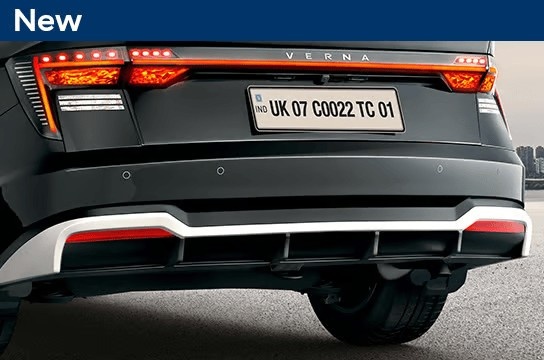
- Revised Front and Rear Bumpers have a more muscular look, with an integrated diffuser element at the rear.
- 16-inch Diamond-Cut Alloy Wheels offer a lightweight yet visually weighty feel.
- Full-width LED Light Bar on both front and rear, creating a connected look.
- Stepped Rear Spoiler enhances the sportiness of the fastback silhouette.
Two new color options have been introduced Classy Blue and Titan Grey Matte. Starry Night, Atlas White, and Abyss Black remain available.
Dimensions remain unchanged at 1765mm width and a 2670mm wheelbase The company calls it the widest sedan in its segment, and that true.
2. Interior — A ₹20 lakh feel in a ₹12 lakh car
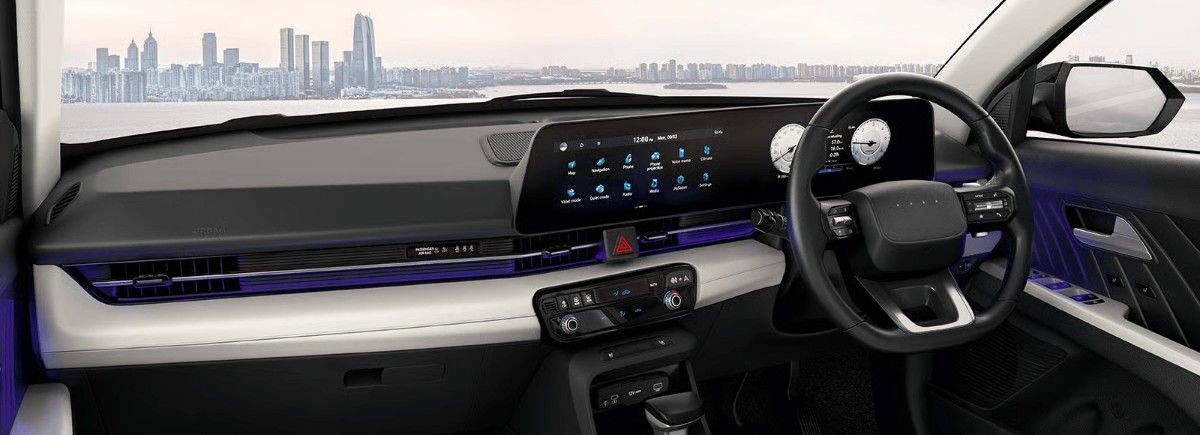
The Verna 2026 cabin genuinely offers an experience above this price range. The first thing you notice when you open the door and sit in is the soft-touch materials dual screen setup, and ambient lighting.
Cockpit: Everything at length for the driver
• New D-Cut steering wheel with updated Hyundai Morse Code logo, grip is good
• 8-Way Electrically Adjustable Driver Seat with Memory Function (segment-first)
• Welcome, Retract Feature The seat automatically reclines upon unlocking
• 4-Way Electrically Adjustable Co-Driver Seat with Electric Walk-in Device (segment-first)
• Leatherette Seat Upholstery: Premium look and feel
• Ventilated and Heated Front Seats for both summer and winter
• Multi-colour Ambient Lighting gives the cabin a premium feel
Technology: Everything is connected
• Dual 10.25-inch Integrated Screens Infotainment and digital cluster combine
• Switchable interface: You can also operate climate controls on the infotainment screen
• 8-Speaker Bose Premium Audio System Music listening experience is genuinely good
• Wireless Android Auto and Apple CarPlay
• Wireless Smartphone Charging
• Hyundai BlueLink — 70+ connected features, 350+ voice commands
• Voice commands work in both Hindi and English
• Remote Engine Start/Stop from phone
• Smart Trunk opens the trunk without pressing a button
BlueLink most useful real-life feature is remote AC In summer, turn on the AC from your phone 10 minutes before boarding ensuring the cabin is already cool.
Rear Seat and Practicality
The wheelbase is 2670mm, 70mm more than the Honda City 2600mm. Rear legroom and kneeroom are both comfortable. Three adults can easily sit There’s also a rear window sunshade, which is especially useful in summer Boot space is the largest in its segment at 528 litres.
3. Engine and Performance Two engines
No new engines were introduced in 2026 The same two proven 1.5L petrol options remain. But don’t mistake these for weaknesses Both engines are extremely capable in their respective use cases.
| Specification | 1.5L NA Petrol | 1.5L Turbo GDi |
|---|---|---|
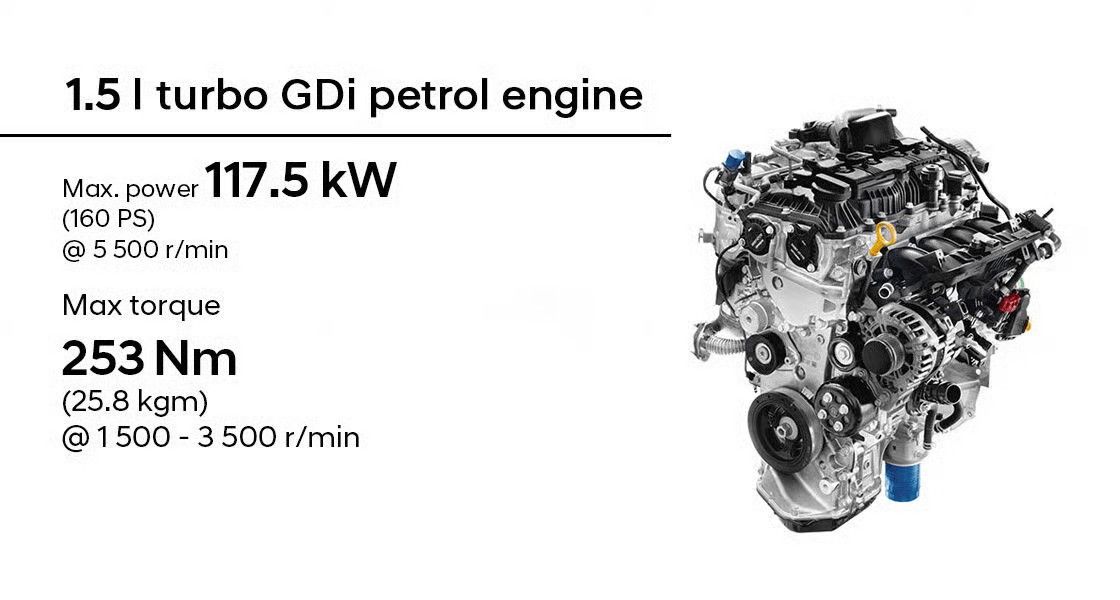
| Power | 113 BHP / 115 PS | 158 BHP / 160 PS |
| Torque | 143.8 Nm | 253 Nm |
| Gearbox | 6-Speed MT / IVT (CVT) | 6-Speed MT / 7-Speed DCT |
| Drive Modes | Eco, Normal | Eco, Normal, Sport |
| Paddle Shifters | No | Yes (Available in DCT) |
| Idle Stop & Go | Yes | Yes |
| ARAI Mileage (Manual) | 18.6 kmpl | — |
| ARAI Mileage (Automatic) | 19.8 kmpl (IVT) | 20.6 kmpl (DCT) |
| Best For | City Driving & Family Use | Highway Driving & Performance |
NA Petrol: The perfect city companion
If 80% of your driving is in the city—going to the office dropping the kids off at school, or going to the market on the weekends—then the NA petrol is for you This engine is smooth, refined, and never confusing Gear changes are imperceptible in the IVT. Maintenance costs are also lower than the turbo.
Turbo GDi: When you need to feel the road
160 BHP and 253 Nm of torque—This is the most powerful combination in the entire segment The Honda City has a maximum of 121 BHP, while the Skoda Slavia has 150 BHP. The Verna Turbo surpasses both The response this car offers on highway on-ramps with the 7-speed DCT is genuinely thrilling. In Sport mode, throttle response becomes sharper. Paddle shifters also offer manual control.
4. Verna Real Mileage
ARAI numbers are obtained under controlled conditions in the company lab Real roads have traffic, traffic signals, AC, and driving styles There fore its always important to know real-world figures.
| Driving Condition | NA Petrol (MT) | NA Petrol (IVT) | Turbo (DCT) |
|---|---|---|---|
| ARAI Certified | 18.6 kmpl | 19.8 kmpl | 20.6 kmpl |
| Heavy City Traffic (AC On) | 8–10 kmpl | 10–12 kmpl | 8–9 kmpl |
| Normal City Driving (AC On) | 11–13 kmpl | 12–14 kmpl | 10–12 kmpl |
| Highway (80–100 km/h) | 16–18 kmpl | 15–17 kmpl | 15–17 kmpl |
| Highway (Aggressive / 120+ km/h) | 13–15 kmpl | 13–15 kmpl | 11–13 kmpl |
| Mixed Driving (City + Highway) | 12–14 kmpl | 13–15 kmpl | 11–13 kmpl |
Notice a pattern: The NA Petrol IVT is most efficient in the city because the IVT (CVT) transmission offers better fuel management at low speeds On the highway, all three have roughly similar ranges.
5. Safety — Over 75 Features, 5 Star Rating
Hyundai has taken safety seriously with the new 2026 Verna. The car received a 5-star rating in the Global NCAP, and the 2026 facelift now includes 7 airbags and 20 Level 2 ADAS features. In total, there are over 75 safety features.
Standard Safety — Across all variants
• 6 Airbags — Driver, Passenger Side, Curtain (standard across all variants)
• ABS with EBD — Stability during emergency braking
• Electronic Stability Control (ESC) with VSM
• Hill Start Assist Control (HSAC)
• ISOFIX Child Seat Mounts
• TPMS (Tire Pressure Monitoring System)
• Disc Brakes — All four wheels
• Rear Parking Sensors
Level 2 ADAS — 20 Features (Smart Sense Suite)
This is the feature set that truly sets the Verna apart Level 2 ADAS means the vehicle intervenes automatically in certain situations—not just stops with a warning.
- Forward Collision Warning and Avoidance Assist The vehicle brakes automatically if there is a risk of a collision ahead.
- Lane Keeping Assist and Lane Departure Warning Correction when leaving a lane.
- Blind Spot Collision Warning and Avoidance
- Smart Cruise Control with Stop & Go Maintaining speed on the highway and stopping in traffic.
- Rear Cross-Traffic Collision Avoidance Assist
- Safe Exit Warning of a vehicle approaching from behind when opening a door (segment-first)
- Autonomous Emergency Braking
- Driver Attention Warning
- Leading Vehicle Departure Alert
Extra in Top Variant (HX10)
• 7th Airbag Center Side Airbag (segment-first)
• 360° Surround View Monitor (4 cameras)
• Blind Spot View Monitor
• Built-in Dashcam — both front and rear no need for separate cameras
6. Complete Variant Guide — Which one should you buy?
Read this section carefully, this is where people often get confused and either buy a smaller variant or overspend.
| Variant | Engine + Gearbox | Ex-Showroom Price | Key Highlights |
|---|---|---|---|
| HX2 | 1.5L NA Petrol / 6-Speed MT | ₹10.98 Lakh | Entry-level variant with essential safety features |
| HX4 | 1.5L NA Petrol / 6-Speed MT | ~₹12.2 Lakh | Improved features while keeping the same engine |
| HX6 | 1.5L NA Petrol / 6-Speed MT or IVT | ₹13.4 – ₹14.4 Lakh | Best value variant with sunroof and ADAS features |
| HX6+ | 1.5L NA Petrol / 6-Speed MT or IVT | ~₹14.8 – ₹15.5 Lakh | Premium features like memory seat, ventilated seats, and sunroof |
Which variant for whom?
- First-time sedan buyer, budget tight → HX4 6MT (₹12.2 lakh) offers essential features
- Need an automatic, daily use with family → HX6 IVT (₹14.4 lakh) this is the most balanced choice
- Need all comfort features, budget ~₹15 lakh → HX6+ IVT memory seat ventilated seats, sunroof
- Performance and safety are both priorities → HX8 Turbo DCT (₹17.15 lakh) no better value
- Want the best of everything, price does matter → HX10 (₹18.25 lakh) — 360° camera, dashcam, 7 airbags
7. Ownership Cost — How much after purchase?
When buying a car Its not just the showroom price that counts; on-road price, insurance, service cost and mileage all add up to the actual cost.
On-Road Price Estimates (Delhi, Base Variant)
- Ex-Showroom Price: ₹10.98 lakh
- Road Tax (approximately 10-12%): ₹1.10–1.32 lakh
- Insurance (1st Year Comprehensive): ₹35,000–45,000
- Registration + Handling: ₹15,000–20,000
- Estimated On-Road (HX2): ₹12.8–13.2 lakh
Service and Maintenance
- First Service: Free (usually 1000 km or 1 month, whichever is earlier)
- Scheduled Service (NA Petrol): Every 10,000 km — approximately ₹4,000–6,000
- Scheduled Service (Turbo): Every 10,000 km — approximately ₹5,500–8,000
- Warranty: 3 years / 100,000 km standard | Extended warranty available
- BlueLink subscription: Free for the first three years, paid annually thereafter
The NA petrol engine has lower maintenance costs than the Turbo If you want to minimise long-term ownership costs, the NA variants are preferable. The Turbo requires long-term care for its DCT clutch and turbocharger.
8. Pros and Cons
Why Buy — Strong Reasons
✅ Segment most powerful engine — 160 BHP Turbo, no competitor matches
✅ Level 2 ADAS with 20 features — Unavailable anywhere else at this price
✅ Electric Walk-in Device + Memory Seat — Segment-first features
✅ 7 Airbags (top variant) — 5-Star Global NCAP proven safety
✅ Built-in Dashcam + 360° camera — In HX10
✅ 528L boot space — Largest in sedan segment
✅ Bose 8-speaker audio — Genuinely premium sound
✅ BlueLink connected tech — Genuinely useful in daily life
✅ 2670mm wheelbase — More rear seat legroom
✅ 75+ safety features — Comprehensive protection
Why Stop — Honest Drawbacks
❌ No Diesel engine — Great for highway-heavy users Cons
❌ The City actual mileage is significantly lower than the ARAI rating, even more so for the Turbo.
❌ Firm ride quality—a bit uncomfortable on broken roads.
❌ Turbo + full features only available in the HX8/HX10 starting at ₹16.28 lakh.
❌ The HX10 top variant is ₹18.25 lakh—priced in SUV territory.
❌ Ground clearance is sedan-typical—avoid rough terrain.
❌ Car Play/AA via wired-to-wireless adapter—not truly wireless in some variants.
9. How does it fare against competitors?
The Verna main competitors are the Honda City, Skoda Slavia, and Volkswagen Virtus. This comparison will help you decide.
| Feature | Verna 2026 | Honda City 2025 | Skoda Slavia |
|---|---|---|---|
| Maximum Power | 160 BHP | 121 BHP | 150 BHP |
| Starting Price | ₹10.98 Lakh | ₹11.99 Lakh | ₹11.49 Lakh |
| ADAS | Level 2 (20 Features) | Basic ADAS | Limited ADAS |
| Maximum Airbags | 7 | 6 | 6 |
| Boot Space | 528 Litres | 506 Litres | 521 Litres |
| Wheelbase | 2670 mm | 2600 mm | 2651 mm |
| Global NCAP Rating | 5 Star | 5 Star | 5 Star |
| Diesel Option | No | No | No |
| Connected Car Technology | BlueLink (70+ Features) | Honda Connect | Limited |
The Honda City now lags behind the Verna in both features and power The City has a maximum power of 121 bhp, while the Verna has 160 bhp. The Skoda Slavia ride quality is slightly smoother than the Verna and the Slavia European-tuned chassis is also appreciated. Still, the top-spec Slavia costs over ₹20 lakh, while the Verna HX10 offers more features for ₹18.25 lakh.
10. Final Verdict
The Hyundai Verna 2026 facelift has once again proven that the sedan segment isn’t dead This car is for those tired of the growing crowd of SUVs and want a car that is connected to the ground effortless, and offers a genuinely premium feel.
For performance, the Turbo DCT offers the sharpest experience in the segment For safety, Level 2 ADAS isn’t available anywhere else in this budget Technology features like Blue Link, Bose, dual screens, and a dashcam are a long list. Practicality is enhanced by a 528L boot and a 2670mm wheelbase.
11. Frequently Asked Questions (FAQ)
What will the on-road price of the Hyundai Verna 2026 be in Delhi?
The on-road price of the HX2 base variant will be approximately ₹12.8–13.2 lakh (including road tax, insurance, and registration). The HX8 Turbo DCT will cost around ₹19–19.5 lakh on-road.
When will the Verna 2026 get a diesel engine?
Hyundai hasn’t made any official announcement yet The company focus is on petrol and hybrid powertrains. There is no confirmed news of a diesel engine.
Is the Verna 2026 better than the Honda City?
In terms of features, power, and technology, yes, the Verna 2026 is clearly better The Honda City has a max power of 121 BHP, while the Verna has 160 BHP. The Verna ADAS package is also more comprehensive The Honda City starting price is ₹11.99 lakh, while the Verna is ₹10.98 lakh.
What is the Verna 2026 actual mileage in the city?
11–13 kmpl in normal city conditions on NA Petrol. 8–10 kmpl in heavy traffic The Turbo delivers 10–12 kmpl in the city, and 8–9 kmpl in aggressive driving.
NA Petrol IVT or Turbo DCT which should you choose?
If you mostly drive in the city and are fuel-cost sensitive, go for the NA IVT If you drive more on the highway and enjoy driving, go for the Turbo DCT The Turbo also requires slightly more maintenance, keep that in mind.
What the difference between the HX8 and HX10?
The HX10 has extra features compared to the HX8 a 7th airbag (centre side), a 360° Surround View Monitor a Blind Spot View Monitor, and a built-in dashcam The price difference is ₹1.10 lakh. If the dashcam and 360° camera are must-haves for you, go for the HX10; otherwise, the HX8 is a better value.
What is the boot space of the Verna 2026?
528 liters This is the largest in this segment, more than both the Honda City (506L) and Skoda Slavia (521L).